- Betsperts Golf
- Posts
- The American Express

In partnership with

A quick reminder on format this week: It’s a 54-hole Pro-Am played on three different courses, followed by a cut, with Sunday played again on the Stadium Course. Look for super long rounds and a distinct lack of coverage for golfers playing on two of the three courses.
It’s also the debut of Scottie for the season, as well as the return of William Zalatoris. Plenty to look forward to this week.
With two courses in rotation not having tracking data, we’re going to focus on the course that the winner will play twice (all three are covered in Ron’s full article if you’d like to take a peek):
The Stadium Course
Designed in 1986 by legendary architect Pete Dye, the Stadium Course is the toughest of the three layouts and will be played twice this week. Modeled after TPC Sawgrass, it features seven holes with water directly in play, including its own par-3 17th-hole island green. It is a true risk-reward course, capable of producing plenty of birdies but also the occasional blow-up round.
The course is known for Dye’s memorable finishing stretch of holes, numbers 16-18. He called these final three holes “maybe the most difficult finishing holes I’ve ever built.” Included is the infamous “San Andreas” hole (#16) which has a greenside bunker over 20 feet deep that runs at least 50 yards up the left side of the green.
At only 7,210 yards, the Stadium Course is the 10th shortest on Tour. Two of the par-5s stretch out beyond 590 yards, but other than that, Tour players have the length to overpower the forced carries as well as many of the shorter holes on the course such as the four par-4s that are each less than 390 yards.
Success on the Stadium Course often comes from bombing it off the tee, but err even slightly, and water and sand are waiting everywhere. Since 2015, it has ranked ninth in penalties off the tee among all Tour courses. Fairway accuracy sits at just 63%, only slightly above the Tour average, while driver usage was below average at 67% last year. Players will need to exercise caution on many holes, laying back off the tee to avoid trouble.
One Habit You’ll Keep

By this time of the year, most New Year goals are already slipping. That’s why the habits that last are the simple ones.
AG1 Next Gen is a clinically studied daily health drink that supports gut health, helps fill common nutrient gaps, and supports steady energy.
With just one scoop mixed into cold water, AG1 replaces a multivitamin, probiotics, and more, making it one of the easiest upgrades you can make this year.
Start your mornings with AG1 and get 3 FREE AG1 Travel Packs, 3 FREE AGZ Travel Packs, and FREE Vitamin D3+K2 in your Welcome Kit with your first subscription.
In addition to the challenging bunkers around its small greens and select fairways, the Stadium Course’s par 5s serve as another key area of defense. Players attempting to go for the green in two often find trouble if they aren’t long off the tee or precise with their approach. While distance is an advantage, success ultimately comes down to smart decision-making and course management.
Most of the par 4s here are “less-than-driver” holes due to tight fairways and the strategically placed bunkers. Strong wedge play from 125 yards and closer is paramount for those who take a more aggressive approach off the tee. Almost half of all approaches come from the 125-200 yard range.
The remodeling of the greens had a major impact last year, increasing their size from the fifth smallest on Tour to the 10th largest at 7,000 square feet. Many of the greens are elevated, and the firmness of the new surfaces punishes approaches that are not struck to the correct distance or line.
Another often-overlooked challenge at the Stadium Course, as well as the Nicklaus and La Quinta courses, is the difficulty of the par 3s. Of the 12 toughest holes players will face this week, nine are par 3s, with an average scoring of 3.10.
While sand saves rates around the green are among the toughest on Tour, scrambling from the almost non-existent rough is the easiest. One important note about the grasses at all three courses is that the Bermuda grass lies dormant this time of year. Fairways and rough are over seeded ryegrass and the greens are over seeded with Poa trivialis. As eight-year PGA Tour caddie, Brian Mull commented, “It’s nothing like Poa annua. They’re like perfect greens, pure carpet…can be a little sticky, not fast, and with minimal grain. Anybody can putt well on them.”

How to Watch
One guy keeps asking me to include how to watch, so I have included how to watch.

Betting
Just some outrights this week. We discussed who we liked and why in more details on the betting preview show, but even with Scottie in the field, I’m not scared to take some longer shots
Ben Griffin +2737
Akshay Bhatia +8000
JT Poston +10050
Sami Valimaki +13584
For more bets, you could certainly check out Noonan’s article for the week:

Rabbit Hole Model
Similar model to the one I made here last year:
Some form coming in
Approach play - heavy
Putting on the West Coast
Scoring! (Birdie or Better rates, Par 5 BoB rate, Eagles)
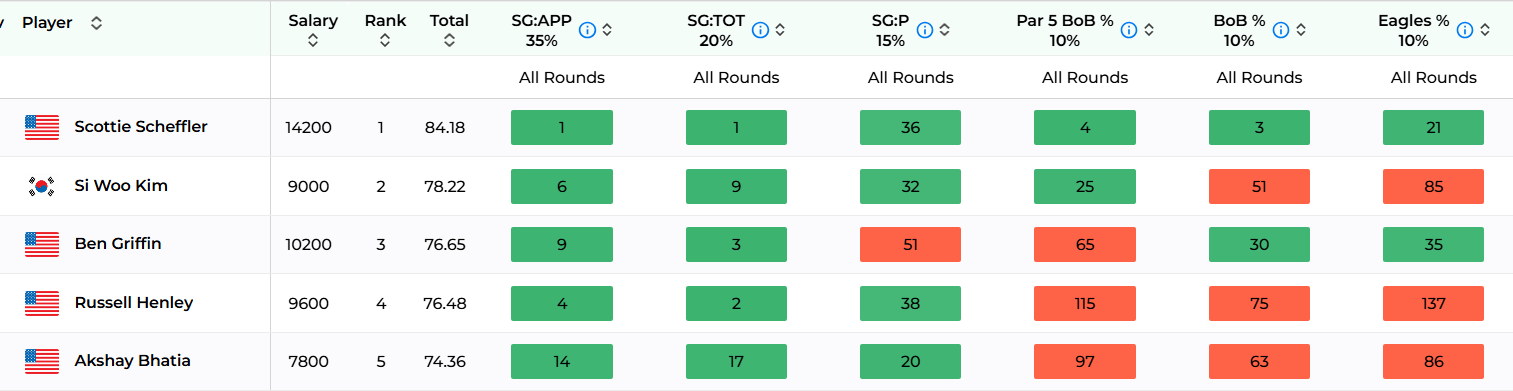
Members can take a peek at the whole thing here.
Weather
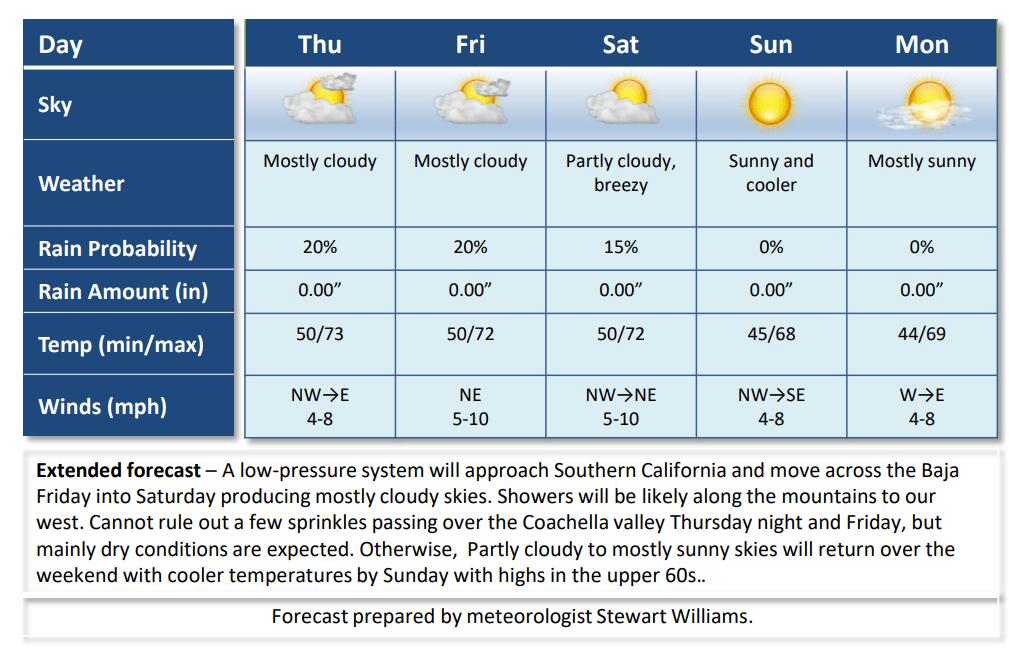
Traditionally, one of the tournaments where the weather can take the week off. Sunny, warm but not hot, light breezes. Cali vibes.
News and Notes
Another return I’m pumped about. This is someone I’ve bet against a bit in majors, as he was carrying a knee injury. I’m hoping he’s healthy and ready to compete again.
Still can’t believe he just punted English/Morikawa out there on Friday morning.
Sick stat of the week:
I’d love to know what the check was for this kid. He gave up a Masters invite to play on the HyFlyers.
As always, bet responsibly, have fun, and remember that you can bet first round leader at all three courses, you degen.
Twitter | YouTube | Website | The Rabbit Hole